
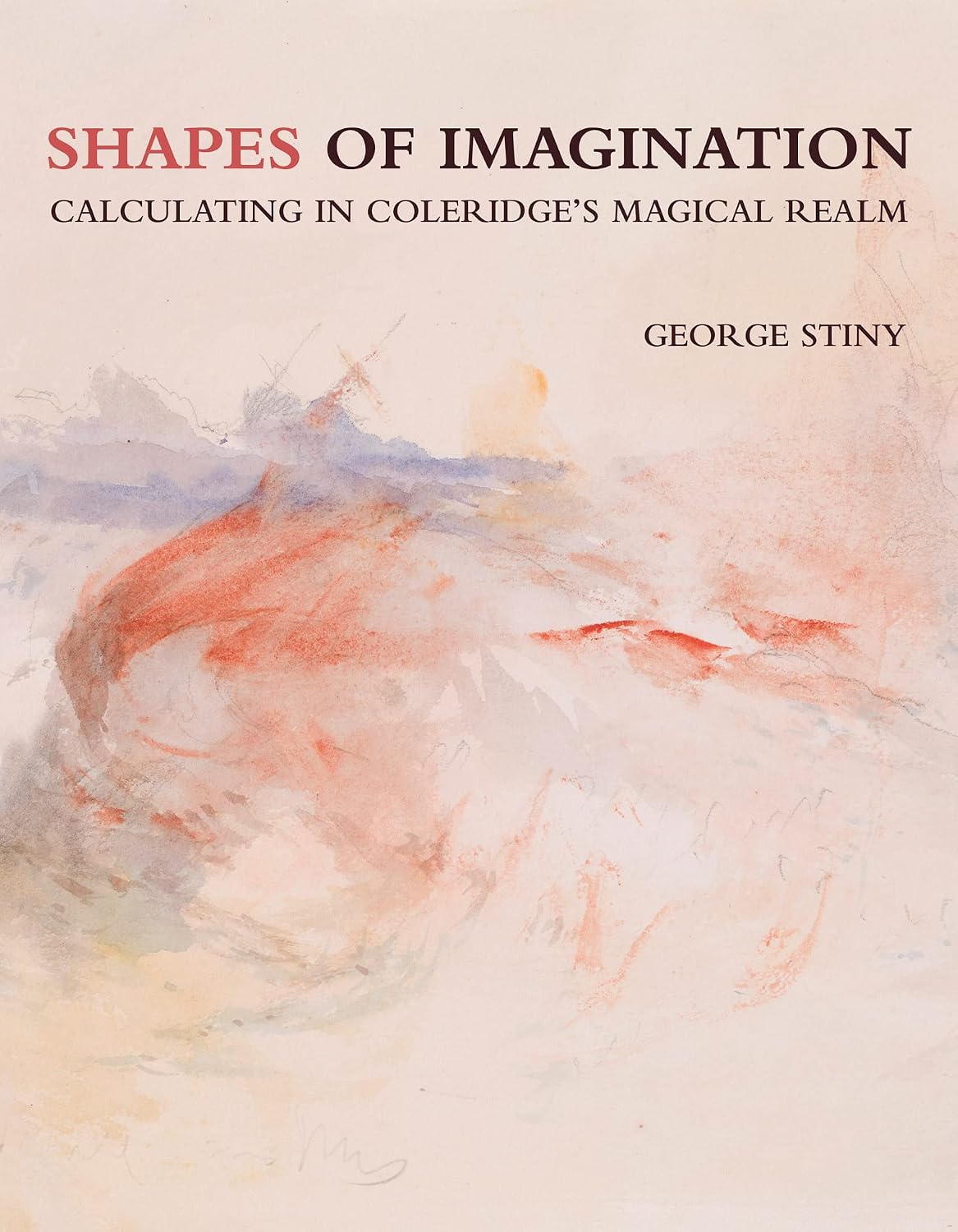
Shapes of Imagination: Calculating in Coleridge's Magical Realm
Product details
| Management number | 231931483 | Release Date | 2026/06/18 | List Price | US$11.03 | Model Number | 231931483 | ||
|---|---|---|---|---|---|---|---|---|---|
| Category | |||||||||
Visual calculating in shape grammars aligns with art and design, bridging the gap between seeing (Coleridge's “imagination”) and combinatoric play (Coleridge's “fancy”).In Shapes of Imagination, George Stiny runs visual calculating in shape grammars through art and design—incorporating Samuel Taylor Coleridge's poetic imagination and Oscar Wilde's corollary to see things as they aren't. Many assume that calculating limits art and design to suit computers, but shape grammars rely on seeing to prove otherwise. Rules that change what they see extend calculating to overtake what computers can do, in logic and with data and learning. Shape grammars bridge the divide between seeing (Coleridge's “imagination, or esemplastic power”) and combinatoric play (Coleridge's “fancy”).Stiny shows that calculating without seeing excludes art and design. Seeing is key for calculating to augment creative activity with aesthetic insight and value. Shape grammars go by appearances, in a full-fledged aesthetic enterprise for the inconstant eye; they answer the question of what calculating would be like if Turing and von Neumann were artists instead of logicians. Art and design are calculating in all their splendid detail. Read more
| ASIN | B09SL28GJ9 |
|---|---|
| XRay | Not Enabled |
| ISBN13 | 978-0262370660 |
| Language | English |
| File size | 3.1 MB |
| Page Flip | Enabled |
| Publisher | The MIT Press |
| Word Wise | Not Enabled |
| Print length | 247 pages |
| Accessibility | Learn more |
| Screen Reader | Supported |
| Publication date | November 15, 2022 |
| Enhanced typesetting | Enabled |
Bestseller ranking
General Geometry


Customers who viewed this product also viewed
For you - Shop all

Correction of product information
If you notice any omissions or errors in the product information on this page, please use the correction request form below.
Correction Request Form